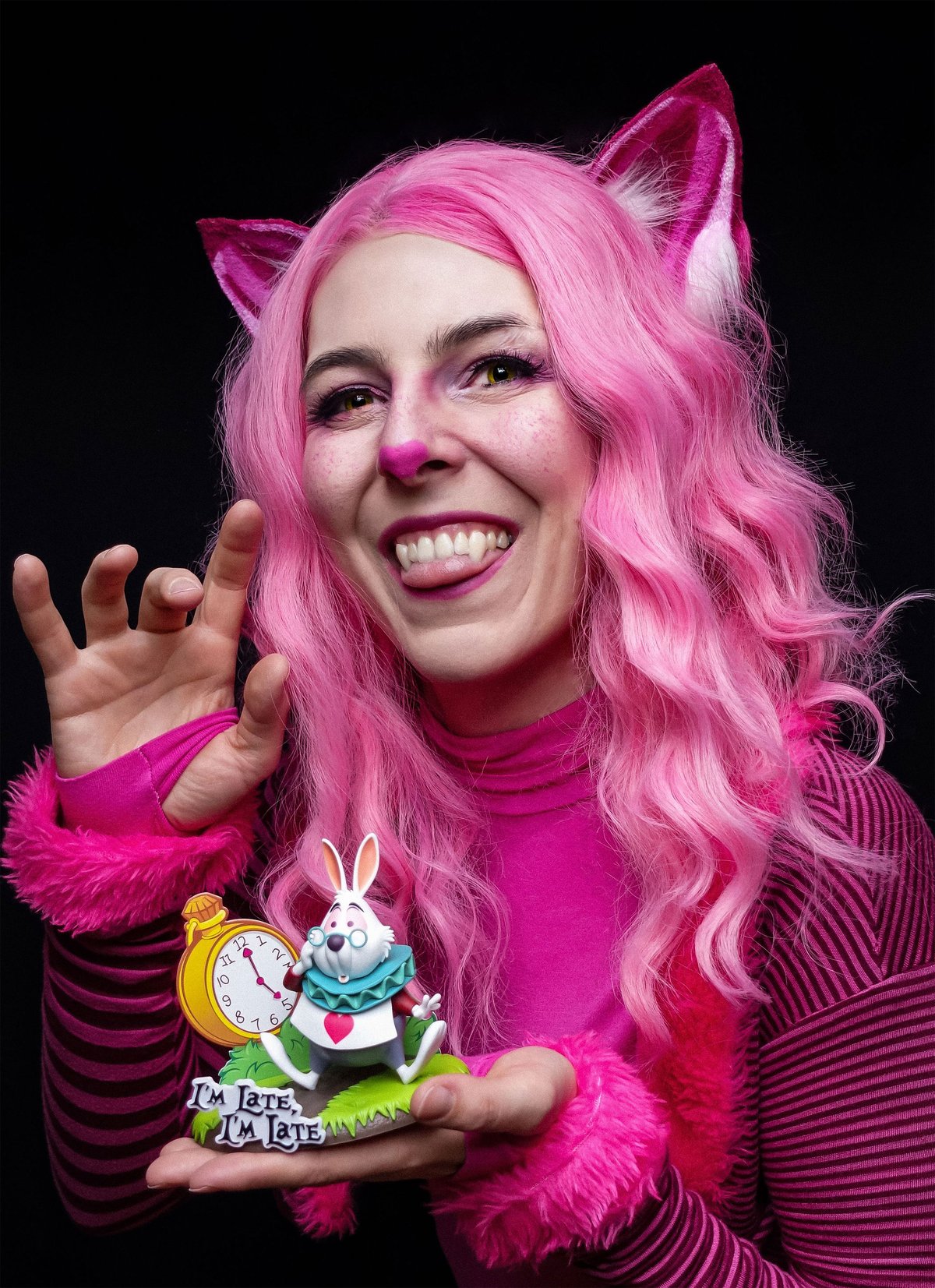
The world of Lewis Carroll's Alice's Adventures in Wonderland is a kaleidoscope of logic, nonsense, and unforgettable characters, but few are as instantly recognizable—or as perpetually frantic—as the White Rabbit. From his iconic, hurried declaration, "I’m late, I’m late, for a very important date!", he acts as Alice's eager herald, triggering her plunge into a world of peculiar encounters. But how have White Rabbit portrayals in Alice in Wonderland adaptations evolved over time, and what do these shifting interpretations reveal about our own anxieties and fascinations?
More than just a plot device, the White Rabbit is a symbol of curiosity, propelling us beyond comfort zones, and a resonant embodiment of modern anxiety and "hustle culture." His frantic energy reflects the dread of missing out in fast-paced lives, while his pristine white coat can suggest both purity and the pressure of maintaining a facade. Across a century of adaptations, from classic animation to gritty live-action, the Rabbit's essence remains, yet his specific presentation—and the deeper meanings we derive from him—have subtly but significantly transformed.
At a Glance: The Evolving Face of the White Rabbit
- Original Intent: Carroll's White Rabbit is primarily a catalyst for Alice's adventure, symbolizing punctuality, duty, and the initial pull of the unknown.
- Early Adaptations (e.g., Disney 1951): Solidified his image as a perpetually flustered, well-meaning, but utterly overwhelmed character, often voiced with a high-pitched, anxious tone.
- Modern Interpretations (e.g., Tim Burton 2010): Often grant him more agency, a slightly more serious demeanor, and a direct role in guiding Alice, sometimes even evolving his motivations.
- Symbolic Resonance: He consistently represents themes of time, anxiety, duty, and the irresistible lure of curiosity, mirroring societal concerns about urgency and identity.
- Visual & Vocal Nuances: Adaptations use animation style, CGI, voice acting, and physical portrayal to underscore different facets of his personality, from innocent guide to burdened soul.
The Original Harried Herald: Carroll's Foundational Rabbit
In Lewis Carroll���s original text, the White Rabbit is the very first Wonderland creature Alice encounters. He’s dressed in a waistcoat, carries a pocket-watch, and is muttering about being late. This initial image sets the entire adventure in motion. Alice's decision to follow him down the rabbit-hole isn't just about curiosity; it's an instinctive response to an urgent, intriguing mystery.
Carroll's Rabbit is inherently tied to time and social obligation. His frantic "I'm late!" isn't merely a personal quirk; it's a reflection of Victorian society's emphasis on punctuality and adherence to a strict schedule. He’s a functionary, an important cog in the Queen of Hearts' court, constantly worried about offending authority or missing his mark. He embodies the tension between rigid societal expectations and the chaotic, nonsensical freedom of Wonderland.
Why the White Rabbit Matters: Deeper Symbolic Echoes
The White Rabbit is far more than a furry, anthropomorphic clock-watcher. He’s a masterclass in literary symbolism, a character whose simple panic belies profound psychological and philosophical weight.
The Siren Call of Curiosity and the Unknown
At his core, the White Rabbit represents the irresistible pull of the unknown. His very existence, a talking rabbit in a waistcoat, is an anomaly that Alice cannot ignore. Following him is an act of courage, a leap into the fantastical, illustrating how curiosity propels individuals beyond their comfort zones. He's the initial spark that ignites Alice's journey of exploration and self-discovery in a world that consistently challenges her perceptions.
A Mirror to Modern Anxiety and "Hustle Culture"
Perhaps no aspect of the White Rabbit resonates more strongly today than his perpetual state of panic. His "I'm late, I'm late!" is the mantra of our hyper-connected, fast-paced world. He’s the embodiment of modern anxiety, a stand-in for the "dread of missing out" (FOMO) that permeates contemporary society. In an era obsessed with productivity, deadlines, and constant striving, the White Rabbit's struggle to balance responsibilities feels remarkably, almost painfully, relatable. He’s forever racing against an invisible clock, a poignant reflection of our own internal pressures.
Purity, Duty, and the Burden of Responsibility
His white coat traditionally symbolizes purity and innocence. Yet, this visual purity is juxtaposed with his constant state of disarray and panic. It hints at the struggle of maintaining an ideal facade while internally wrestling with overwhelming duties. He's a loyal, if terrified, servant of the Queen, burdened by the immense responsibilities placed upon him. This internal conflict makes him a complex, often sympathetic figure, even amidst the absurdity of Wonderland.
Early Screen Interpretations: Capturing the Frantic Essence
The cinematic journey of the White Rabbit began almost as early as film itself. Early silent films and animated shorts attempted to bring Carroll’s characters to life, often with rudimentary effects. However, it was a mid-century masterpiece that truly cemented the White Rabbit's visual and vocal identity for generations.
Disney's Animated Classic (1951): The Definitive Fluster
Walt Disney's Alice in Wonderland presented arguably the most iconic White Rabbit portrayal to date. Voiced by Bill Thompson, this Rabbit is a paragon of flustered politeness and sheer panic. His design—thin, spectacles perched on his nose, ever-consulting his oversized pocket watch—perfectly encapsulates his nervous energy. Disney's adaptation amplified his role as a nervous functionary, constantly terrified of the Queen of Hearts' wrath, making his "I'm late!" not just a personal problem, but a matter of potential decapitation. This version largely defined the character's appearance and personality in popular culture, influencing countless subsequent interpretations. You can Discover the Alice in Wonderland Rabbit in many forms, but the Disney version remains a touchstone.
Other Early Adaptations: Varying Degrees of Urgency
Before and even after Disney, other adaptations explored different facets. Early live-action films, often with actors in elaborate costumes, sometimes emphasized the absurdity of his appearance more than his internal state. Puppet shows and educational films might simplify his role, focusing solely on him as the initiator of Alice's journey. Regardless of the medium, the central theme of his urgency remained a constant, signaling the imminent plunge into Wonderland's unpredictable depths.
The Rabbit in Live-Action: From Whimsy to Psychological Depth
Live-action adaptations offer unique opportunities to explore the White Rabbit's character, leveraging both elaborate costuming and the nuances of human (or CGI) performance.
Tim Burton's Vision (2010 & 2016): A More Grounded Guide
Tim Burton's Alice in Wonderland films presented a White Rabbit (voiced by Michael Sheen) with a distinctly different flavor. While still concerned with time and duty, this version feels less overtly frantic and more purposeful. Nivens McTwisp, as he is named, is a key member of the Underground Resistance against the Red Queen. He is older, wiser, and deliberately seeks out Alice, guiding her back to Wonderland to fulfill her destiny as the Slayer of the Jabberwocky.
This portrayal adds layers of agency and courage, transforming him from a mere reactive functionary to a proactive, albeit still nervous, participant in the larger struggle. He’s still hurried, but his "lateness" takes on a more profound, almost fateful, significance. This particular adaptation highlights how character motivations can be deepened, turning a simple herald into a pivotal ally.
TV Series and Miniseries: Expanding the Narrative
Television adaptations have had more time to delve into secondary characters, sometimes granting the White Rabbit expanded backstories or character arcs. Some interpretations might portray him as a kindly, if perpetually stressed, mentor figure. Others might lean into his bureaucratic nature, showing him as a harried chief of staff for the Queen of Hearts, constantly trying to manage her volatile temper and unreasonable demands. These longer formats allow for a richer exploration of his interactions with other characters, such as the tyrannical Queen of Hearts, offering a fuller picture of the pressures he faces.
Independent & Experimental Films: Deconstruction and Reimagination
In the realm of independent and experimental cinema, the White Rabbit can undergo radical transformations. Some filmmakers might strip away his anthropomorphic qualities, using a real rabbit to symbolize pure, unadulterated curiosity or primal fear. Others might reinterpret him as a psychological manifestation of Alice's own anxiety, or even as a trickster figure whose motivations are far from benign. These portrayals challenge traditional understandings, inviting viewers to question the very nature of guidance and destiny within the Wonderland narrative.
Voice and Animation: Crafting Personality Through Performance
The White Rabbit is a character heavily reliant on how he sounds and moves. The subtle choices made by voice actors and animators are crucial in shaping audience perception.
The Importance of Vocal Actors
A high-pitched, rapidly delivered voice often conveys the White Rabbit's panic, as heard in Disney's classic. This vocal style immediately communicates his nervous disposition and relentless rush. In contrast, a slightly deeper, more measured tone (like Michael Sheen's for Burton's adaptation) can suggest a character burdened by grave responsibility rather than simple fluster, adding a layer of gravitas. The rhythm, pitch, and speed of his dialogue are powerful tools in defining his character.
Animation Styles Reflecting Character
The way the White Rabbit is animated also speaks volumes. Smooth, flowing animation might highlight his grace despite his haste, while jerky, staccato movements can emphasize his nervousness and uncoordinated panic. CGI has opened up new possibilities, allowing for incredibly detailed textures and more realistic, yet still fantastical, movements. For instance, in Burton's films, his fur and expressions are rendered with a tactile quality that grounds him more, even as he speaks and plots. This careful blend of realism and fantasy helps to cement his role as a bridge between Alice's reality and Wonderland's absurdity.
Beyond the Screen: Stage, Gaming, and Literature
The White Rabbit's influence extends far beyond film, manifesting in myriad creative forms that continue to reinterpret his iconic dash.
Musicals and Plays: Physicality and Stage Presence
On stage, the White Rabbit's urgency often translates into dynamic physical comedy. Actors, sometimes in elaborate, oversized costumes, use exaggerated movements and frantic pacing to convey his constant hurry. Musicals might give him songs that articulate his anxiety or his role as a harbinger of change. The live, immediate nature of theatre allows for audience interaction with his predicament, making his panic palpable and often comedic.
Video Games: Interactive Interpretations and New Narrative Functions
Video game adaptations of Alice in Wonderland often cast the White Rabbit as a quest-giver or a tutorial guide. In some games, following him might be a core mechanic, leading players through initial levels. Other games, especially those with darker themes (like American McGee's Alice), might transform him into a more spectral, almost haunting figure, a tragic remnant of a shattered Wonderland, or a more overtly manipulative character. This interactive medium allows players to experience the chase firsthand, often making his guidance—or misguidance—a central part of the gameplay. These games can delve into themes of curiosity and the mysteries of Wonderland with a new level of immersion.
Re-imagined Novels and Comics: Deeper Lore, Alternate Realities
Literary re-imaginings and comic books offer the most freedom to expand the White Rabbit's character. Some authors might explore his life before Alice, delving into his history with the Queen of Hearts or his motivations for being so perpetually late. Others might place him in alternate realities, where his role is completely different—perhaps he's a detective, a rebel leader, or even a villain. Graphic novels can use distinct art styles to emphasize different aspects of his personality, from whimsical to genuinely sinister. These adaptations often provide deeper insights into the world-building of Wonderland itself, exploring the roles of various fantastical creatures and their symbolism.
The Rabbit as a Mirror: Reflecting Societal Anxieties
The enduring appeal of the White Rabbit isn't just his charm; it’s his uncanny ability to reflect our own anxieties back at us. In a world saturated with information, constant demands, and the pressure to be perpetually "on," the White Rabbit's existential dread of missing an important date feels incredibly relevant.
His frantic dash serves as a potent metaphor for modern life. We are all, in a sense, chasing our own White Rabbit—the next deadline, the latest trend, the elusive work-life balance. His struggle to keep up with an ever-accelerating pace is a timeless human condition, but it's particularly acute in our current era. This makes him a powerful literary figure for exploring themes related to stress, time management, and the universal fear of falling behind. He is, in many ways, the patron saint of being overwhelmed, a perfect embodiment of anxiety in modern literature.
Common Misconceptions About the White Rabbit
Despite his iconic status, there are a few common misunderstandings about the White Rabbit that adaptations sometimes play into or correct.
Is He a Villain or Just a Guide?
Many new readers or viewers might initially perceive the White Rabbit as simply a guide. While he certainly initiates Alice's journey, his later appearances, especially during the trial of the Knave of Hearts, show him acting as a loyal, if terrified, servant of the Queen, actively participating in the absurd legal proceedings. He’s not a villain, but he is complicit in the tyrannical system of Wonderland, highlighting the complexities of surviving within oppressive structures. He’s a character of duty, not necessarily of morality, often caught between his fears and his prescribed role.
His Relationship with the Queen of Hearts
While the ground truth tells us the White Rabbit and the Queen of Hearts have a dynamic interplay, some portrayals might simplify this to just a master-servant relationship. However, their interactions unravel layers of meaning spanning curiosity, authority, and self-growth. The Queen, with her "Off with their heads!" mantra, warns against blind adherence to authority. The Rabbit's perpetual fear of her illustrates the perils of unquestioned power and the oppressive nature of tyrannical rule, pushing us to reflect on when authority becomes overwhelming. He represents the everyday person caught in the machinery of power.
Choosing Your Rabbit: What Different Portrayals Offer Viewers
When you encounter an Alice in Wonderland adaptation, paying attention to the White Rabbit's portrayal can tell you a lot about the film's overall tone and message.
- A frantic, comedic Rabbit: Often signals a lighter, more whimsical adaptation focused on adventure and childlike wonder.
- A serious, purposeful Rabbit: Suggests a deeper narrative, perhaps one exploring themes of fate, destiny, or political intrigue within Wonderland.
- A fearful, sympathetic Rabbit: Highlights the oppressive nature of Wonderland's rulers and invites empathy for those caught in its absurd system.
- A re-imagined, morally ambiguous Rabbit: Points to an adaptation that aims to deconstruct the classic tale, offering new psychological or philosophical interpretations.
The White Rabbit, therefore, acts as a crucial barometer for the adaptation’s thematic intentions. His character becomes a lens through which to examine broader societal issues and personal quests, inspiring creativity and exploration in both creators and audiences alike.
The Unending Chase: The White Rabbit's Enduring Appeal
The White Rabbit, forever late, forever chasing an elusive deadline, remains one of literature's most potent and pliable figures. His journey alongside Alice—and his independent struggles—continue to resonate because they tap into universal human experiences: the thrill of curiosity, the burden of responsibility, and the omnipresent anxiety of time slipping away.
Each new adaptation offers a fresh canvas for his character, allowing filmmakers, authors, and artists to project contemporary concerns onto his waistcoat and pocket watch. As long as humanity grapples with deadlines, desires, and the dizzying pace of life, the White Rabbit will continue his hurried dash, leading new generations down the rabbit hole of introspection and adventure. The narratives of Alice in Wonderland remain timeless, reminding us that the real adventure resides in the questions we dare to ask, and embracing the journey, however absurd, can unlock many of life’s mysteries.