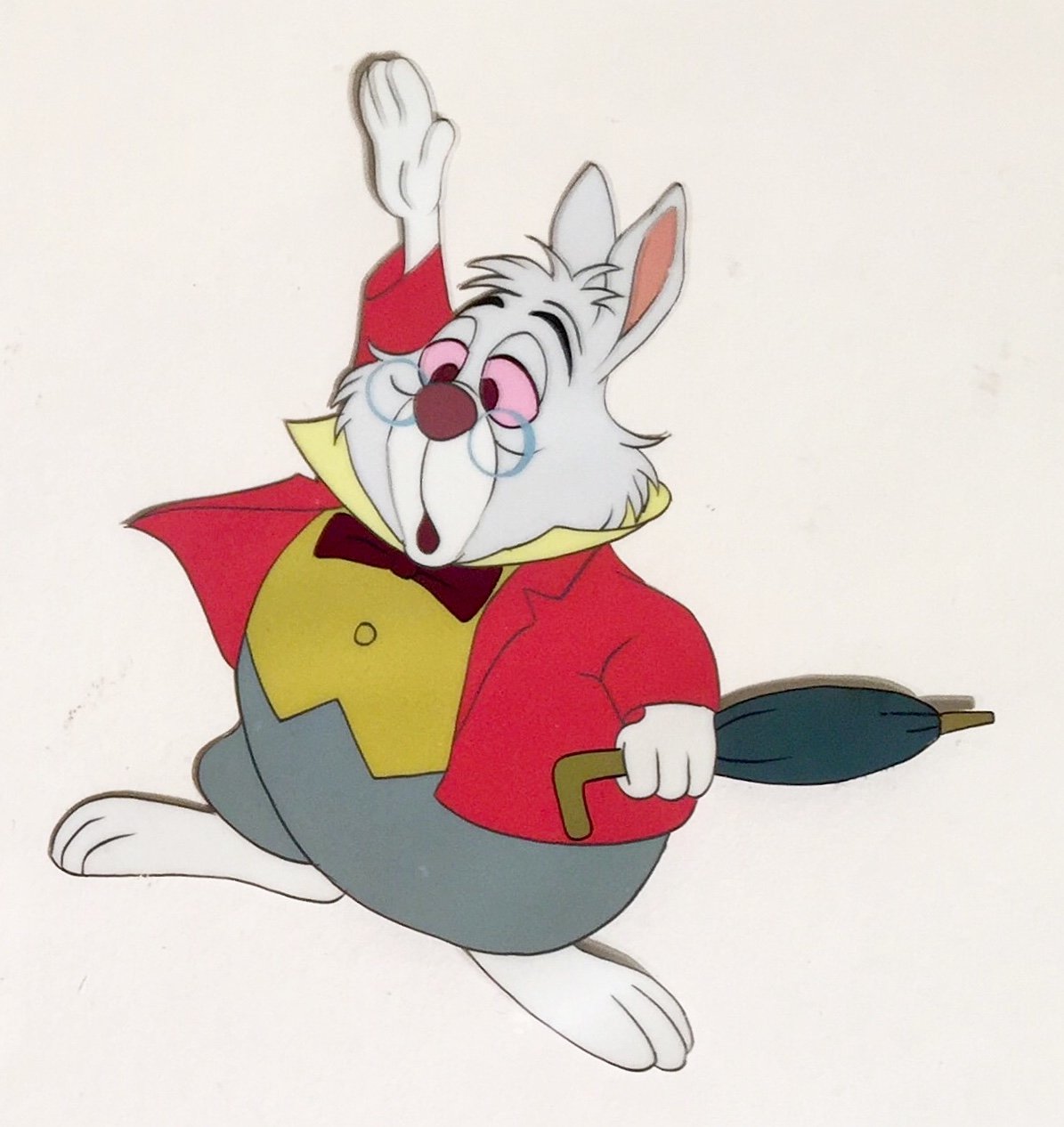
Imagine stumbling upon a creature so utterly out of place, yet so compelling, that you can't help but follow. For Alice, in Lewis Carroll's Alice's Adventures in Wonderland, that creature is the White Rabbit. This seemingly anxious, waistcoat-clad individual isn't just a quirky character; he is, in many profound ways, The White Rabbit as Alice's Guide to Wonderland, a catalyst and a mirror reflecting deeper truths about time, society, and the very act of discovery.
From his iconic catchphrase "I’m late! I’m late!" to his frantic scurrying, the White Rabbit embodies more than just punctuality. He’s the unwitting, often unhelpful, but undeniably essential figure who pulls Alice from her mundane reality into a world where logic bends and identity shifts. He doesn't hold her hand or offer advice; instead, he opens the door to an adventure that forces her to confront her own understanding of the world.
At a Glance: Unpacking the White Rabbit's Role
- The Ultimate Catalyst: His sudden appearance and urgency spark Alice's entire journey into Wonderland.
- Time's Relentless March: He personifies Victorian society's obsession with schedules and deadlines, contrasting sharply with childhood freedom.
- A Call to Curiosity: Following him symbolizes embracing the unknown and embarking on a path of self-discovery.
- Social Mirror: His anxiety about status and timeliness reflects the pressures of societal hierarchies.
- Gateway to the Subconscious: He leads Alice into a dreamlike realm, mirroring a descent into her own inner world of wishes and fears.
- Duality Embodied: He's both fascinating and faintly unsettling, representing the allure and apprehension of venturing beyond the familiar.
The Curious Case of the Chronically Late Rabbit: Alice's First Encounter
The White Rabbit doesn’t politely invite Alice into Wonderland; he pulls her in with the sheer force of his discombobulated urgency. Picture it: a placid summer day, Alice idly lounging, when suddenly, a white rabbit with pink eyes scurries past, lamenting his tardiness. He's wearing a waistcoat, he's pulling a watch from his pocket—an image meticulously brought to life by original illustrator John Tenniel. This isn't just unusual; it's an outright breach of ordinary reality.
His appearance isn't an invitation as much as it is a provocation. Alice's decision to follow him down the rabbit hole isn't born of explicit guidance, but rather an irresistible pull of curiosity. This initial pursuit sets the entire stage for her adventures, positioning the White Rabbit as the indispensable key to Wonderland. Without his frantic dash, there is no journey, no transformation, no Wonderland at all. He is the prime mover, the inciting incident personified.
A Harbinger of Time and the Relentless March of Adulthood
One of the most immediate and striking aspects of the White Rabbit is his incessant preoccupation with time. "I’m late! I’m late! For a very important date!" is his mantra, echoing through the initial chapters. This isn't mere quirkiness; it’s a profound symbolic statement about the world Alice is entering, and indeed, the world Carroll inhabited.
Victorian Society's Ticking Clock
The mid-19th century, when Carroll wrote Alice’s Adventures in Wonderland, was an era defined by burgeoning industrialization and the meticulous demands of schedules. Railway timetables dictated travel, factory whistles marked the workday, and punctuality became a virtue, often a necessity. The White Rabbit, with his prim waistcoat and pocket watch, is a walking, talking embodiment of this societal shift. He represents the very essence of Victorian time consciousness, a character perpetually bound by unseen appointments and deadlines. He's a stark contrast to Alice's pre-rabbit hole world of leisurely picnics and daydreaming, where time had little hold.
Childhood Abandon vs. Adult Schedules
At its heart, the White Rabbit crystallizes the tension between the carefree abandon of childhood and the relentless, structured march of the adult world. Alice's initial curiosity is that of a child; she follows a talking rabbit out of pure wonder. But the Rabbit's anxiety, his constant checking of the watch, is an adult concern. He's rushing towards responsibilities Alice can barely fathom, offering a glimpse into a future where minutes matter more than whims. This constant urgency serves as a subtle yet pervasive element throughout Alice’s journey, underscoring how she is being drawn into a more complex, adult-like world, with the White Rabbit as her frantic, time-obsessed usher.
The Rabbit Hole: A Descent into Curiosity and Self-Discovery
The act of following the White Rabbit down the rabbit hole is perhaps the most iconic moment in children's literature, a potent metaphor for delving into the unknown. It’s a decision driven by pure, unadulterated curiosity, and it marks Alice's active engagement in her own unfolding destiny.
Radical Freedom and Questioning Reality
Philosophers like Jean-Paul Sartre spoke of "radical freedom," the idea that we are condemned to be free, constantly making choices that define our existence. Alice, in choosing to follow the Rabbit, exercises this freedom. She's not forced; she chooses to pursue the unknown, to question the boundaries of her reality. This journey, initiated by the Rabbit, continually prompts her to question everything around her, aligning with Jacques Derrida’s notion of différance, where meaning is constantly deferred and never quite fixed. Wonderland, guided by the unpredictable movements of the enigmatic White Rabbit, forces Alice to re-evaluate every assumption she holds.
The Hero's Journey Begins
In Joseph Campbell's framework of the Hero's Journey, the White Rabbit perfectly embodies the "Call to Adventure." He's the herald, the unexpected event that shatters the protagonist's ordinary world. Alice's pursuit isn't just a physical descent; it's a symbolic dive into a journey of self-discovery. Each bewildering encounter, each frustrating logical paradox, serves to strip away her preconceived notions, forcing her to adapt, to question her own identity, and ultimately, to grow. The Rabbit may not offer explicit guidance, but his very existence and actions are a constant, unspoken challenge for Alice to navigate and understand her new environment, and in turn, herself.
Navigating Wonderland's Peculiar Social Fabric: Hierarchy and Anxiety
Beyond his role as a timekeeper and catalyst, the White Rabbit also functions as a curious lens through which to view social structures, particularly those of Victorian England. His behavior, from his attire to his interactions, subtly reveals a world governed by power and performance.
A Symbol of Victorian Status
The White Rabbit’s "prim waistcoat" and his constant worry about his social standing (especially when serving the Duchess and the Queen) are significant. He’s not a common rabbit; he's a functionary, an attendant, anxious about fulfilling his duties and maintaining his position. This immediately hints at the intricate social hierarchy of the Victorian era, where appearances and adherence to rigid roles were paramount. His frantic scurrying isn't just about being late; it's about the fear of failing to meet expectations from those above him in the social pecking order.
The Pressure to Conform
Sociologist Erving Goffman discussed the concept of "impression management" and the anxiety of maintaining status within "surveilled social hierarchies." The White Rabbit perfectly illustrates this. He's constantly performing, constantly worried about what others think, especially those in positions of authority like the Duchess or the Queen of Hearts. His anxiety is palpable, reflecting the pressure to conform to rigid social schedules and expectations, lest one fall out of favor or be deemed inadequate. His role as a messenger, constantly receiving and relaying orders, further emphasizes this point, showing the White Rabbit as a poignant symbol of social pressure. Alice witnesses this firsthand, getting caught in the crossfire of his frantic attempts to please.
Unlocking the Subconscious: The White Rabbit as a Dream Guide
Much of Alice’s Adventures in Wonderland possesses a dreamlike quality, where logic is fluid, characters are archetypal, and events unfold with a symbolic resonance. In this context, the White Rabbit acts as a crucial guide into Alice’s own subconscious landscape.
Freud's Rabbit Hole: A Return to the Womb?
From a Freudian perspective, Alice's pursuit of the White Rabbit and her subsequent tumble down the rabbit hole can be interpreted as a symbolic descent into the subconscious mind. The rabbit hole itself, a dark, narrow, winding passage, has been famously analyzed as mirroring a "return to the womb," a regression to an earlier, more primal state of being. Wonderland, then, becomes an externalization of Alice's inner world—her repressed wishes, fears, and developing psyche laid bare in symbolic form. The White Rabbit, therefore, isn't just leading her to a fantastical land; he's leading her to confront her own nascent internal conflicts.
Jung's Archetypal Trickster and Guide
Carl Jung's analytical psychology offers another compelling lens. Here, the White Rabbit could be seen as an archetypal guide, much like the wise old man or the trickster figure that often appears in myths and dreams. The trickster, in particular, embodies duality—both creative and destructive, foolish and wise, a chaotic force that often instigates change and challenges existing norms. The Rabbit’s inconsistent behavior, his moments of fear contrasting with his pompousness, align with this trickster archetype. He's not a clear-cut mentor, but he serves to unlock new pathways in Alice's mind, revealing aspects of her inner world she might not yet comprehend. He’s the White Rabbit, the unwitting Jungian catalyst for Alice’s psychological exploration.
The Uncanny Allure: Duality of Fear and Fascination
The White Rabbit's initial appearance is an incongruity that sparks both fascination and a subtle sense of unease. He's not overtly threatening, but his existence signals a world where the familiar rules no longer apply. This duality is central to his role as a guide.
Threshold Guardian and Call to Adventure
Revisiting Joseph Campbell’s Hero’s Journey, the White Rabbit serves as both the "Call to Adventure" and, in a symbolic sense, a "Threshold Guardian." While he doesn't actively bar Alice's entry, his strangeness and the bizarre world he ushers her into represent the boundary between the known and the unknown. He characterizes how fear and fascination often entwine at the very edge of discovery. Alice's choice to follow him despite the inherent strangeness is an embrace of this duality, a step into a world that promises wonder but also holds potential perils.
Freud's Uncanny
Sigmund Freud’s concept of "the uncanny" (das Unheimliche) is perfectly suited to describing the White Rabbit. The uncanny is that which is simultaneously familiar and alien, something that ought to remain hidden but has come to light. A talking, waistcoat-wearing rabbit with a pocket watch is precisely this: a familiar animal endowed with profoundly unfamiliar, human characteristics. This incongruous appearance evokes both dread and curiosity, drawing Alice in while unsettling her sense of reality. The Rabbit’s very being challenges the boundaries of what Alice understands, making him the uncanny White Rabbit, beckoning her into the unfamiliar.
Beyond the Whiskers: What the White Rabbit Teaches Us About Guidance
So, is the White Rabbit a "good" guide? In the traditional sense, perhaps not. He doesn't offer wisdom, protection, or a clear path. He's largely self-absorbed, frantic, and even rude at times. Yet, his form of guidance is arguably more profound.
He's a guide not by instruction, but by catalysis. He doesn't show Alice the way; he opens the way. His presence forces Alice to engage, to observe, to question, and to make her own decisions in a world that constantly defies her expectations. He is the ultimate "trailblazer," inadvertently leading her down a path that requires her to rely on her own wit and resilience. Through his anxious scurry, he teaches Alice—and us—that sometimes the most impactful guidance comes not from clear directions, but from the unsettling, intriguing, and utterly unexpected nudge into the unknown. He's a reminder that genuine self-discovery often begins with an ambiguous invitation.
Common Interpretations & Misconceptions: Debunking the Myths
The White Rabbit, like many iconic literary figures, is often subject to various interpretations. Let's clarify a few common points:
- Is he a benevolent mentor? No. While he inadvertently leads Alice to adventure, his actions are driven by self-preservation and anxiety, not a desire to aid or instruct Alice. He's an accidental mentor, at best.
- Is he evil or malicious? Not intentionally. He's often flustered, sometimes dismissive, and occasionally complicit in the Queen's cruelties, but he never actively seeks to harm Alice. His role is more that of a harried functionary than a villain.
- Is he the protagonist of Wonderland? Absolutely not. He's the catalyst for Alice's story. Wonderland revolves around Alice's experiences and her navigation of its absurdities; the Rabbit is merely the initial doorway and a recurring symbol within that journey.
- Is his "lateness" a comment on time travel? While his time-consciousness is central, there's no textual evidence to suggest he's a time traveler or that his lateness is a symptom of temporal displacement beyond his role as a symbol of Victorian anxiety.
Understanding these distinctions helps solidify his true, symbolic significance as the White Rabbit, Alice's enigmatic guide.
Embracing Your Own Rabbit Hole: Lessons from Wonderland's Guide
The White Rabbit, with his frantic pace and elusive nature, ultimately serves as a powerful metaphor for the unexpected catalysts in our own lives. He reminds us that profound journeys often begin not with a clear map, but with a sudden, intriguing disruption.
What does this mean for you? It's an invitation to:
- Embrace Curiosity: Don't shy away from the unfamiliar. Like Alice, allow yourself to follow the intriguing, even if it seems illogical at first.
- Question the Norms: The Rabbit's frantic adherence to invisible schedules can make us reflect on our own unquestioned routines. Are we rushing for something truly important, or just because we feel we "should"?
- Trust Your Inner Compass: The White Rabbit offers no directions; Alice must constantly figure things out for herself. This resilience and adaptability are crucial skills for navigating any "Wonderland" life throws at us.
- Recognize Unconventional Guidance: Not all guides are wise old wizards. Sometimes, the most transformative push comes from an anxious rabbit, a fleeting glimpse of the extraordinary that sparks an adventure within.
The White Rabbit is more than just a character; he's a timeless symbol. He is the call to adventure, the ticking clock of societal expectation, and the mysterious portal to the depths of our own potential. So, the next time an unexpected, slightly bizarre opportunity presents itself, ask yourself: are you brave enough to follow your own White Rabbit?