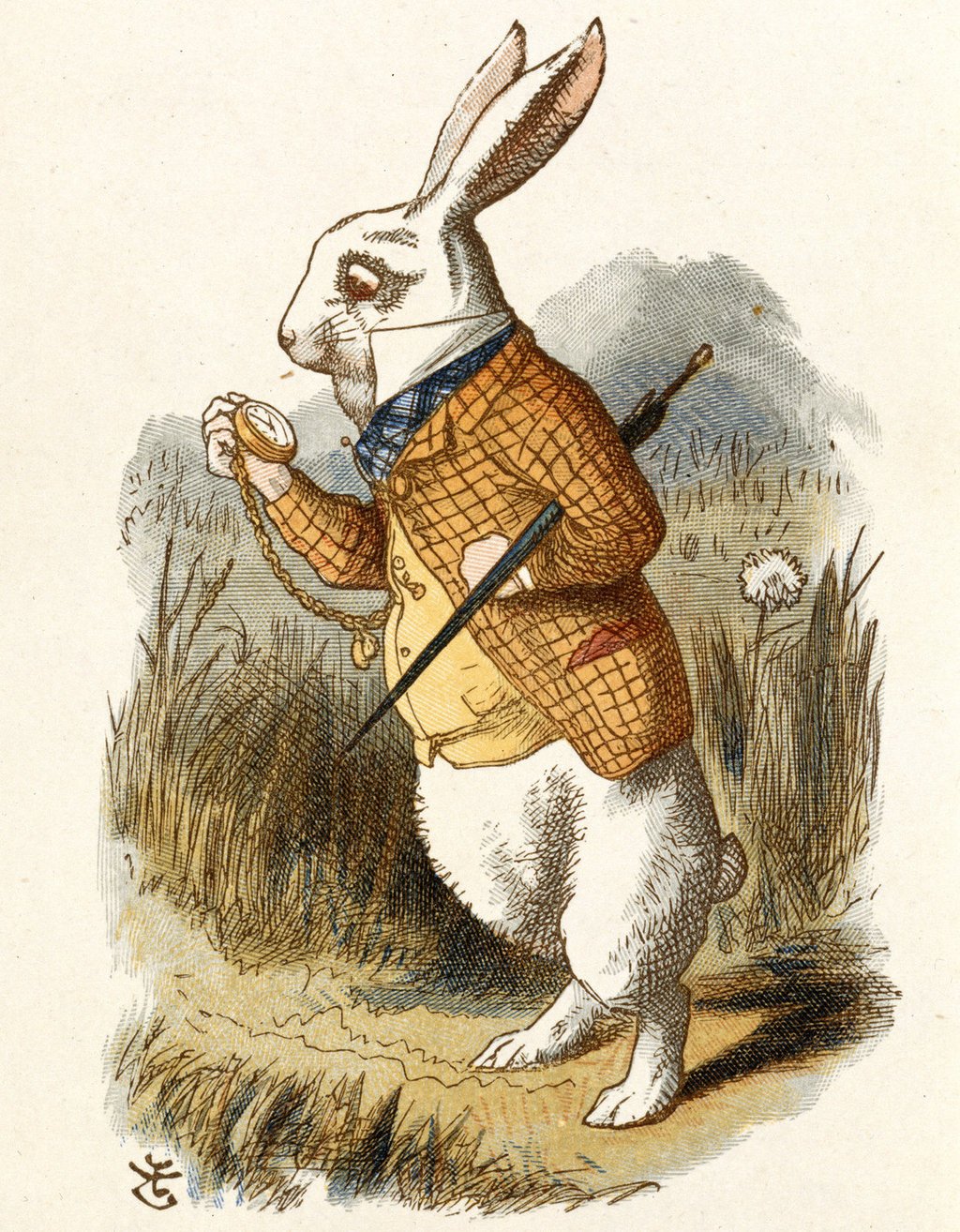
Few literary figures capture the essence of perpetual motion and barely contained panic quite like the White Rabbit from Lewis Carroll's Alice's Adventures in Wonderland. From his iconic declaration, "Oh dear! I shall be too late!" to his frantic dashes across Wonderland, he is a character steeped in a unique blend of anxiety, social ambition, and profound nervousness. Delving into a Psychological Analysis of the White Rabbit's Character reveals more than just a creature late for a very important date; it uncovers a fascinating study of chronic stress, performative busyness, and the psychological impact of living under authoritarian rule.
This isn't just about a children's story; it's about exploring the human psyche through a whimsical lens, examining how external pressures can shape an individual's entire demeanor and behavior.
At a Glance: The White Rabbit's Core Psychological Profile
- Chronic Anxiety: Defined by persistent fear, nervousness, and a constant sense of impending lateness or failure.
- Status-Driven: Obsessed with appearances, social standing, and maintaining a facade of importance within Wonderland's convoluted hierarchy.
- Impulsive & Reactive: Prone to erratic behavior, rudeness, and even extreme suggestions (like burning down Alice's house) when under pressure.
- Fear of Authority: Trembles in the presence of the Queen of Hearts, indicating a deep-seated apprehension of powerful figures.
- Performative Urgency: His constant hurry might be a genuine internal state, but it also serves as a public display of his perceived significance.
- Obsessive-Compulsive Tendencies: The repetitive checking of his watch and muttering about time point towards an inability to deviate from ingrained patterns.
The Perpetual Panic: A Snapshot of the White Rabbit
Imagine living every moment in a state of mild agitation, where the clock is always ticking faster than you can keep up. This is the White Rabbit's reality. He is, by Carroll's own description, a perennially grumbling, red-eyed inhabitant of Wonderland, instantly recognizable by his waistcoat and a pocket watch—which he curiously keeps in his foot. His signature phrase, "Oh dear! I shall be too late!", isn't just a catchphrase; it's a window into his very soul.
From the moment Alice first encounters him, anxiously running into a rabbit hole that serves as her unwitting gateway to Wonderland, his nervous energy is palpable. His body trembles constantly, a physical manifestation of an internal state perpetually vibrating between fear, unexpected experiences, and fleeting moments of happiness. This isn't just a character trait; it's his defining characteristic, shaping every interaction and decision he makes.
Beneath the Waistcoat: Unpacking His Anxieties
The White Rabbit's anxiety isn't a mere quirk; it's a pervasive force that governs his existence. It manifests in a variety of behaviors, from his trembling body to his irritable demeanor.
The Fear of Lateness as an Existential Dread
Is the White Rabbit genuinely late, or is "lateness" a metaphor for something deeper? His constant worry about being "too late" could symbolize a broader existential anxiety—a fear of missing out on opportunities, failing to meet expectations (either his own or those of Wonderland's bizarre society), or simply not living up to his perceived responsibilities. This isn't just about punctuality; it's about a fundamental unease with the flow of time and his place within it. His pocket watch, always consulted, always confirming his urgency, becomes an externalized symbol of his internal clock of worry.
This ceaseless concern with time, however, also paradoxically prevents him from achieving true efficiency. He's so consumed by the idea of being late that he likely makes more mistakes or takes less direct routes, fueling his own frantic cycle.
Social Anxiety and Performance Pressure
The White Rabbit is not merely an anxious individual; he is a creature acutely aware of his social standing. Described as a distinguished rabbit with a large house and a gardener, he always wears gloves, a waistcoat, and a pocket watch – symbols of decorum and status. Yet, beneath this veneer of respectability, lies a deep-seated fear of social repercussions.
His interactions with Alice often reveal the White Rabbit's pervasive fear and anxiety. When Alice encounters him searching for his lost fan and gloves, he is impatient and short with her. This isn't necessarily innate malice but rather a manifestation of stress: when his ability to perform his duties (or maintain his image) is threatened, his politeness crumbles. This suggests a form of social anxiety, where the fear of embarrassment or failure in front of others overrides his capacity for empathy or grace. He knows he has a role to play, and any deviation from it causes immense distress.
The Illusion of Grandeur: Status, Belonging, and a Big House
The White Rabbit's frantic scurrying and distinctive attire are more than just character quirks; they are critical elements of the White Rabbit's distinctive appearance that underscore his attempts to carve out a place for himself in Wonderland's bewildering social landscape. He might be perpetually rushed, but he's also perpetually dressed for an occasion, signaling an acute awareness of social expectations.
A Facade of Importance
Why the need for a waistcoat, gloves, and a pocket watch if one is simply a rabbit? These aren't utilitarian items for a creature, but rather accessories of status. His large house and gardener further establish him as a figure of some consequence within Wonderland. His constant hurry could, therefore, be interpreted as a performative act. By always appearing busy and important, he reinforces his own status in a world where logic is a fluid concept and social hierarchies are bizarrely enforced. His "Oh dear!" might be a lament, but it also serves as a public announcement of his perceived indispensability.
Consider how we, in the real world, often mimic busyness to signal importance or success. The White Rabbit is perhaps the quintessential example of this phenomenon, a creature whose self-worth is intertwined with his perceived level of "busyness" and proximity to power.
Navigating Wonderland’s Peculiar Pecking Order
The White Rabbit is clearly entangled in Wonderland’s peculiar social hierarchy. He is part of the royal procession and acts as the King's herald during the trial of the Knave of Hearts. This role places him in a precarious position: he needs to appear competent and authoritative, yet he remains deeply subservient to the Queen of Hearts. His trembling body and nervous disposition underscore the immense pressure he operates under.
At the croquet tournament, he even shushes Alice, demonstrating his acquired sense of authority within specific contexts, even as his own fear makes him vulnerable. His behavior around the Queen is a prime example of his struggle to maintain composure while serving powerful, unpredictable figures. He intercedes with the King regarding evidence, and presents an unrelated letter as "further evidence," highlighting his fumbling attempts to navigate a nonsensical legal system while trying to impress those in power.
Impulsivity and Instability: A Mind on the Brink
Beneath the frantic professionalism, the White Rabbit also displays a worrying degree of impulsivity and emotional instability, particularly when his carefully constructed world is challenged.
Erratic Behavior Under Pressure
One of the most startling examples of the White Rabbit's erratic behavior occurs when he mistakes Alice for his housemaid, Mary Ann, and later, when she grows too large for his house. In his panic, he suggests burning Alice's house down to remove her! This isn't the action of a rational, distinguished gentleman; it's the desperate lashing out of a mind overwhelmed by circumstances beyond its control.
This moment reveals a frightening depth to his fear-driven responses. When his status, comfort, or simply his routine is disrupted, he reverts to extreme, almost violent, solutions. This suggests a fragile coping mechanism that buckles under stress, turning his anxiety into aggression.
The Shifting Sands of Logic
At the trial of the Knave of Hearts, the White Rabbit acts as the King's herald. He reads the accusation, intercedes with the King regarding evidence, and even presents and reads an unrelated letter as "further evidence." This reflects not logical reasoning, but an almost slavish adherence to procedure, however absurd, and a desperate attempt to perform his duty. His inability to discern relevant from irrelevant evidence, or to question the nonsensical nature of the trial, points to a mind that prioritizes obedience and perceived order over actual sense. This showcases the dynamics between the White Rabbit and authoritarian figures, where independent thought is suppressed in favor of ritualistic performance.
Alice's Mirror: How Her Presence Disrupts His World
Alice's journey into Wonderland is inextricably linked to the White Rabbit, and her presence often acts as a catalyst, stripping away his carefully maintained facade and revealing his raw vulnerabilities. The very first moment she sees him, he is already in a state of distress, drawing her into his frantic world.
The Catalyst of Chaos
Alice, as an outsider, represents an unpredictable element that constantly throws the White Rabbit off balance. When she finds and wears his white gloves, or when she disrupts his house, she inadvertently dismantles his attempts at order and control. These incidents force him to confront situations that his rigid, anxious mind struggles to process. The the complex relationship between Alice and the White Rabbit is less a dialogue and more a series of collisions, with Alice's natural curiosity and growth often directly undermining the Rabbit's frantic attempts to maintain his precarious social and emotional balance.
Her actions, however innocent, are perceived as threats by the White Rabbit, exposing his underlying fears of losing his possessions, his control, or his reputation.
Symbolism in Motion: The White Rabbit as a Literary Device
Beyond his individual psychology, the White Rabbit serves as a powerful symbol within Carroll's narrative, inviting readers to consider deeper literary symbolism within Alice’s adventures.
The Call to Adventure
The White Rabbit is the very first creature Alice sees, and it is his hurried disappearance down the rabbit hole that instigates her entire adventure. In this sense, he acts as the "herald" or "call to adventure" in a classic monomythic structure. He represents the irresistible pull of the unknown, the sudden disruption of the mundane that propels the hero (Alice) into a new, transformative world. Without his frantic appearance and urgent disappearance, Alice might never have left her ordinary world. His role is foundational, setting the entire narrative in motion. To truly grasp his significance, one must understand The White Rabbit in Wonderland as the gateway to the extraordinary.
Time and Its Tyranny
The pocket watch is perhaps the most iconic symbol associated with the White Rabbit. It represents not just time, but the oppressive, tyrannical nature of time in a world where logic is inverted. His constant worry about being late suggests a profound anxiety about the relentless march of moments, a fear of time slipping away or of failing to meet its arbitrary demands. This resonates deeply with human experience, where deadlines and schedules often dictate our pace and generate stress. The White Rabbit embodies the universal struggle against the clock, a struggle made even more poignant in Wonderland's chaotic environment.
The Absurdity of Bureaucracy
The White Rabbit’s role as the King's herald during the Knave of Hearts' trial highlights the absurd, performative nature of bureaucracy. He dutifully reads out accusations, interjects with the King, and presents completely irrelevant "evidence"—all while maintaining an air of solemn importance. This portrayal satirizes the often-senseless rituals and procedures of real-world legal and governmental systems, where form often triumphs over substance, and the pursuit of truth can be lost in a flurry of meaningless motions. He is a cog in a nonsensical machine, illustrating the psychological toll of participating in such a system.
Beyond the Pages: What the White Rabbit Teaches Us
The White Rabbit, despite his fantastical origins, offers surprisingly relevant insights into human behavior and societal pressures.
The Perils of Perpetual Busyness
In an age defined by constant connectivity and the pressure to be productive, the White Rabbit’s "Oh dear! I shall be too late!" rings disturbingly true. He is the ultimate symbol of perpetual busyness, always rushing, always on the brink of missing something vital. This relentless hurry often leads to inefficiency, stress, and a lack of true presence. His character serves as a cautionary tale: a reminder that constant motion does not equate to progress, and that true effectiveness often requires thoughtful pausing rather than frantic dashing. How many of us, like the White Rabbit, confuse frantic activity with genuine purpose?
The Performative Nature of Status
The White Rabbit’s elaborate attire and his distinguished status in Wonderland underscore the performative aspects of social standing. He embodies the idea that we often project an image of importance or urgency to gain respect or maintain our place within a social hierarchy. His nervous trembling beneath the waistcoat and gloves reveals the high cost of maintaining such a facade. It teaches us that external markers of status can often mask deep internal insecurities and anxieties. We see this in contemporary society with "hustle culture" and the pressure to constantly appear busy and successful, often at the expense of mental well-being.
Frequently Asked Questions About the White Rabbit's Psychology
Understanding the White Rabbit often leads to deeper questions about his motivations and the underlying psychological themes he represents.
Is the White Rabbit truly malicious?
Based on Carroll's description and his actions, the White Rabbit is not truly malicious. His rudeness and extreme suggestions (like burning Alice's house down) stem from intense fear, panic, and a desperate desire to maintain order and his social standing. These are reactive behaviors born of anxiety, not pre-meditated cruelty. He's often overwhelmed and acts erratically under pressure, rather than with ill intent.
What does his constant lateness symbolize?
His constant lateness primarily symbolizes a pervasive anxiety about time, duty, and consequence. It can represent the universal human fear of missing opportunities, of failing to meet societal expectations, or of simply not being "enough" within the relentless march of time. It also highlights the absurdity of adhering to rigid schedules in an illogical world like Wonderland.
Why is he so afraid of the Queen of Hearts?
The White Rabbit is profoundly afraid of the Queen of Hearts because she represents ultimate, irrational authority. In Wonderland, her decrees are absolute and often result in severe, illogical punishments (like "Off with their heads!"). As a creature trying desperately to navigate and survive within this unpredictable hierarchy, the White Rabbit's fear is a rational response to an irrational and dangerous power figure. His trembling and subservience are survival mechanisms.
Understanding the Hurried Heart: A Final Reflection
The White Rabbit, in his perpetual state of hurried anxiety, offers a surprisingly complex and enduring psychological study. He is a character caught between the demands of a nonsensical world and his own fragile attempts to maintain order, status, and sanity. Through his trembling body, frantic pronouncements, and desperate striving, he mirrors aspects of the human condition that resonate even today: the pressure of time, the fear of judgment, and the lengths to which we go to maintain our place in a world that often feels just as nonsensical as Wonderland.
He reminds us that even within the most whimsical narratives, deep psychological truths can be found, prompting us to look beyond the surface of a character to understand the hurried heart beating beneath the waistcoat. His story isn't just about being late; it's about the profound and often-hidden costs of living in a state of constant, performative urgency.